Fabrizio Gutiérrez is Head of Growth & Marketing at Landbot, with over 15 years of international experience in growth, marketing, and go-to-market strategy. Throughout his career, he has helped companies navigate different stages of growth — from early-stage expansion to global scale, M&A, and IPO environments. His expertise spans SaaS, product-led growth, digital marketing, and revenue strategy, with a strong focus on connecting product, marketing, and sales to drive sustainable growth. Today, he is particularly focused on how AI is reshaping go-to-market and the way companies acquire, engage, and convert customers
Black Friday Customer Service Rarely Breaks on Volume. It Breaks on Repetition.
Hundreds of identical questions arrive in the same four days. This 10-step checklist shows what to automate, what to keep human, and how to score your team’s readiness before the peak.
How do I prepare customer service for Black Friday?
This guide walks through a 10-step Black Friday customer service checklist. Automate the repeat questions with AI agents, keep a visible handoff to your team, and finish setup a week before the sale.
Peak season doesn’t create new support problems. It multiplies the ones you already have, and it does it in the four busiest days of your year.
Key Takeaways
Most peak-season tickets repeat the same five or six questions, so a small set of automated answers covers a large share of the volume.
One source of truth for promotion, shipping, and return rules prevents most Black Week confusion.
Automate order status, promotion rules, and sizing; keep complaints, exceptions, and high-value orders with people.
A visible human handoff makes shoppers trust automated answers more, not less.
The Ready-by-Friday Test: four questions that score how exposed your team is before the peak.
Plan for the December returns wave, not just Black Week.
Why Does Customer Service Break on Black Friday?
Black Friday customer service rarely fails because of one big problem. It fails because of hundreds of small, identical questions arriving at once: where is my order, does this code work, can I return this after Christmas.
Each question is easy. Together, they bury your team right when every minute counts.
And the volume is concentrated in very few days. According to Adobe Analytics data reported by Talk Business, US shoppers spent $44.2 billion online during Cyber Week 2025, and phones accounted for 56.4% of online transactions over the season. That means more shoppers asking questions from a small screen, in the middle of a purchase, expecting an answer in seconds.
Teams are already responding with automation. Salesforce’s Cyber Week 2025 data shows agentic customer service conversations grew 55% week over week.
The question is no longer whether to automate. It’s what to automate first.
What to Automate and What to Keep Human
AUTOMATE WITH AN AI AGENT
KEEP WITH YOUR TEAM
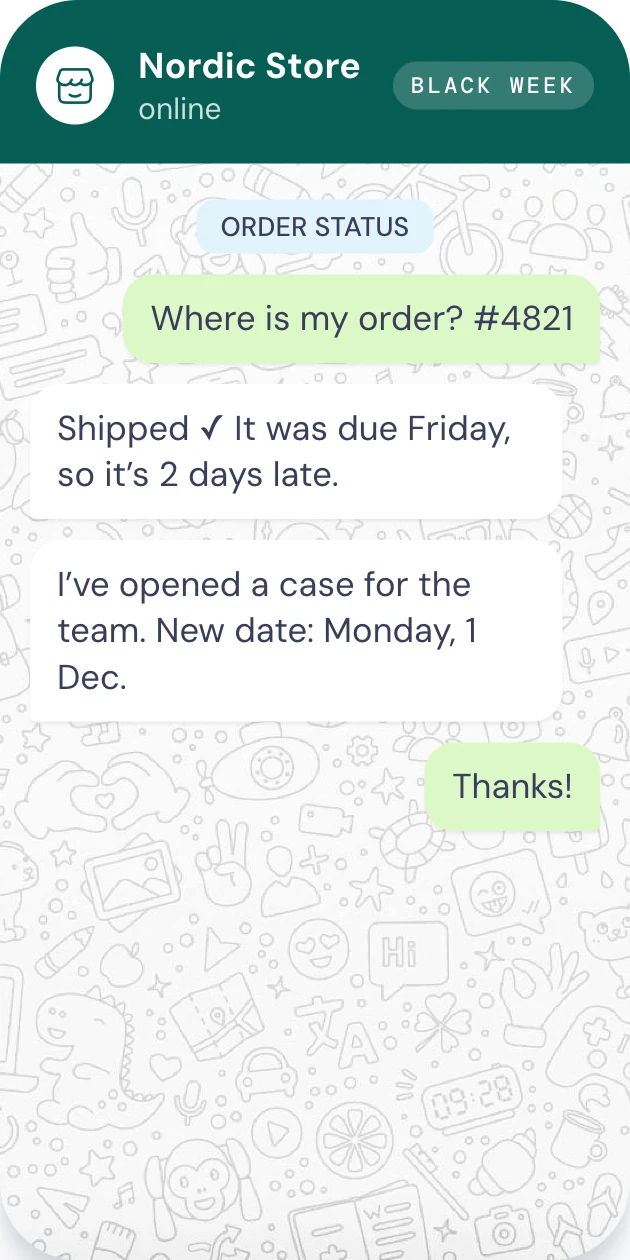
Order status and delivery estimates
Complaints and angry customers
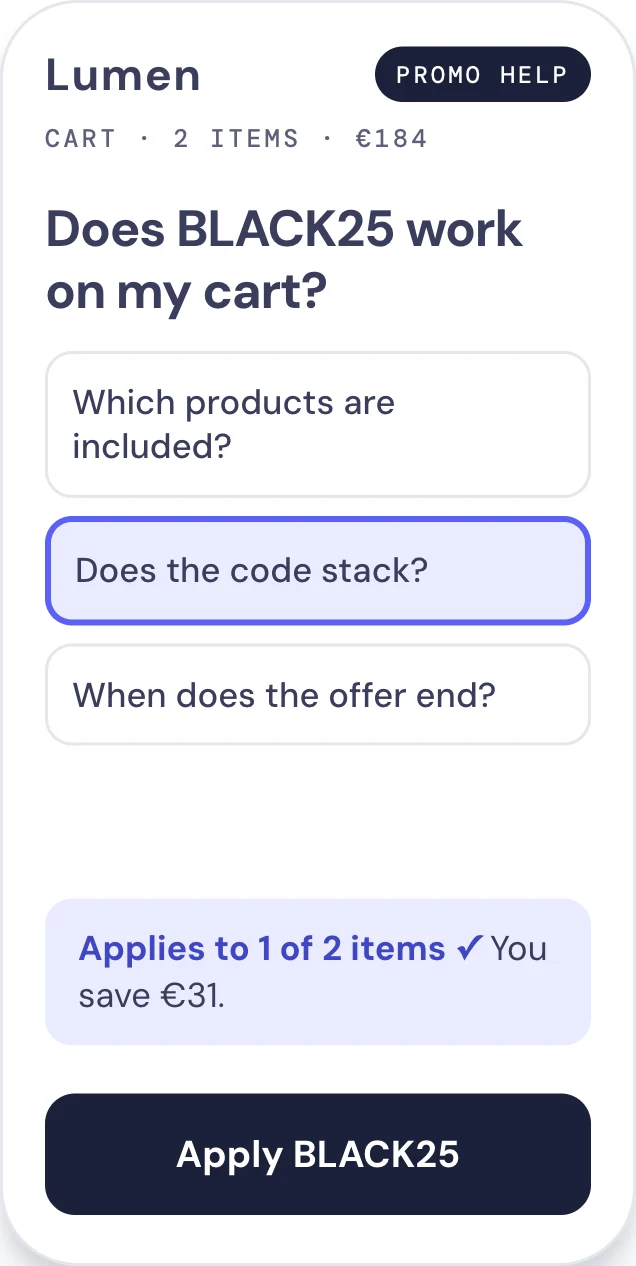
Promotion rules, codes, and deadlines
Exceptions to the policy
Sizes, stock, and back-in-stock alerts
Damaged or lost orders
Return eligibility and return labels
High-value or B2B orders
Shipping cut-off dates for Christmas
Anything legal or payment-related
Rule of thumb: if the answer is the same for every customer, automate it. If the answer depends on judgment, keep it human.
Before going further, the obvious disclosure: Landbot builds AI agents for customer service, on websites and on WhatsApp. The checklist below works with whatever tool you use. Where we mention Landbot, it’s to show what a step looks like in practice.
What Is Ticket Deflection in Peak Season?
Definition
Ticket deflection is the share of customer questions resolved by self-service or an AI agent without ever becoming a ticket for your team.
During Black Week, deflection is the number that decides whether your team spends Friday on complaints that need a person or on the fortieth “where is my order?” of the hour.
But deflection only counts when the question is actually resolved. An agent that loops a frustrated shopper, or hides the way to a person, doesn’t reduce tickets. It delays them and makes them angrier.
Deflection that hides the human isn’t deflection. It’s abandonment.
The Ready-by-Friday Test: How Exposed Is Your Team?
Before you build anything, measure your exposure. These are the four questions to take into your next team meeting, scored 0 to 10 each (0 = this breaks on Friday, 10 = no change from a normal day).
Landbot · Framework
The Ready-by-Friday Test
How exposed your support team is before the peak. Score each question 0 to 10.
1
4
What share of last November’s tickets could be answered without a person today?
A low score means your top contact reasons have no automated answer yet.
0 · breaks on Friday10 · a normal day
2
3
If your promotion rules changed tonight, how many places would you need to update?
Website, FAQ, macros, agent, emails: every extra place is a future contradiction.
0 · breaks on Friday10 · a normal day
3
5
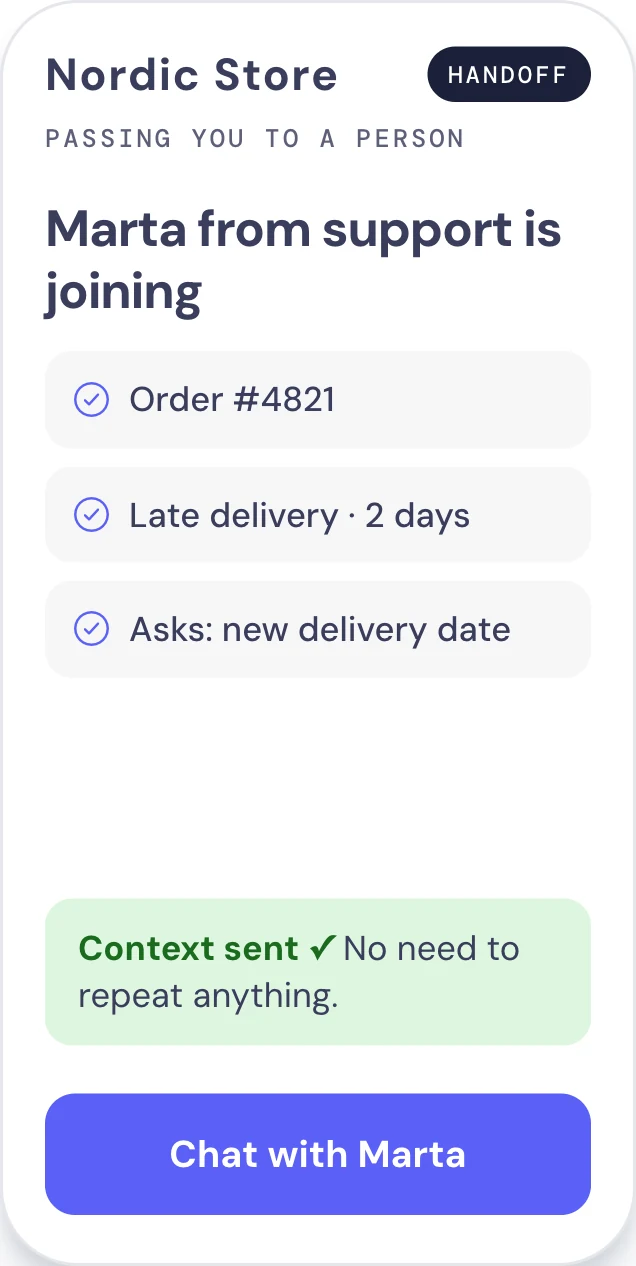
When a conversation reaches a person, do they receive the order number and the question, or do they start from zero?
0 · breaks on Friday10 · a normal day
4
4
If volume tripled on Friday morning, what would break first: response time, tone, or the team?
You can’t hire your way out of a low Coverage score. You can only write your way out.
PHASE 01
6 → 1 WEEKS OUT
Before the Peak: Six Weeks to One Week Out
01
TICKETS
Audit Last November’s Tickets
Export last year’s tickets from late November and early December and tag the top ten reasons for contact. This list decides everything else: which answers to write, which agents to build, and where you need people.
02
KNOWLEDGE
Write Your Promotion Rules in One Place
Which products are included, whether codes stack, when each offer starts and ends. Put it in one document that your site, your agent, and your team all read from. Most Black Week confusion comes from three versions of the same rule.
03
POLICY
Publish a Clear Holiday Return Policy
Shipping cut-offs for Christmas delivery, the extended return window, and what happens with gifts. Publish them on one page your agent can answer from, and link it in order confirmation emails.
04
WEBSITE · WHATSAPP
Automate “Where Is My Order?”
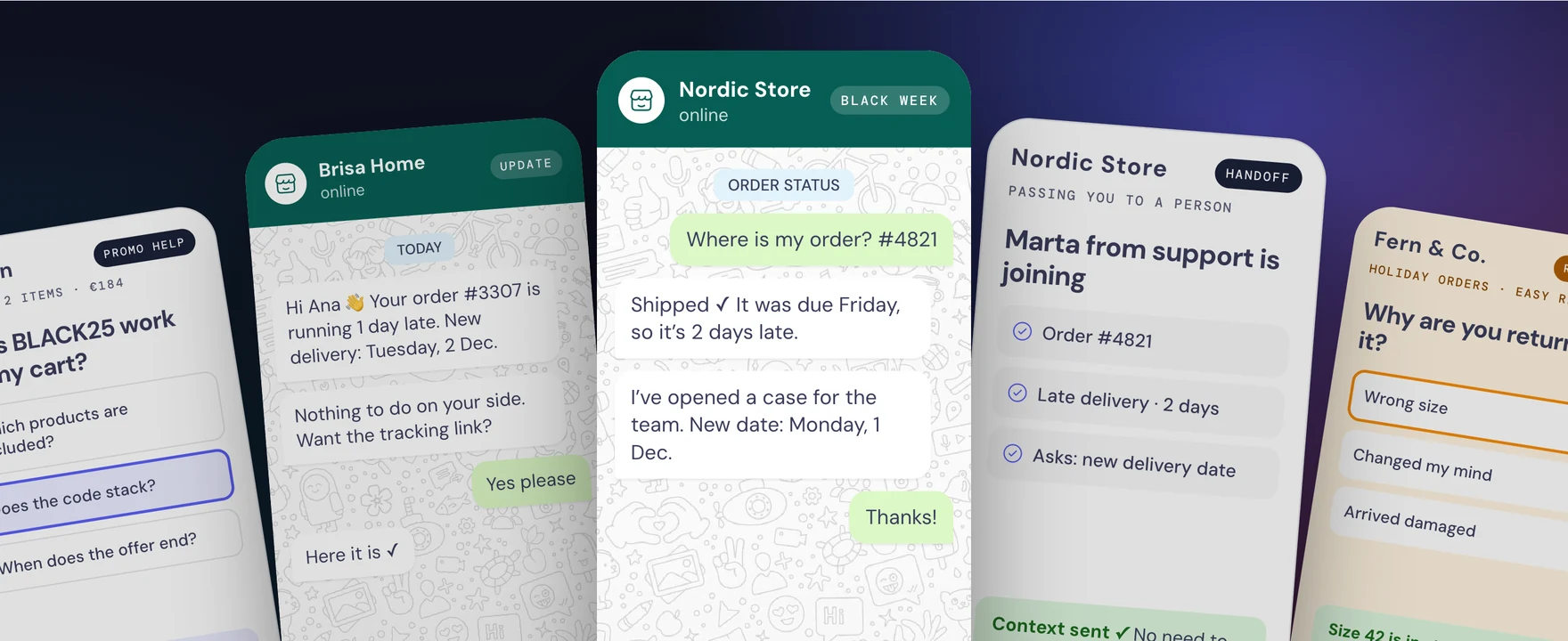
Order status (WISMO, in support jargon) is usually the biggest ticket category of the season. An agent that asks for the order number and email, shows the status, and opens a case only when the order is late removes a large share of repetitive work.
With Landbot, you connect your order data through native integrations and webhooks and configure the flow yourself, without waiting on IT.
05
HANDOFF
Design the Handoff Before You Need It
Decide which conversations go to a person, who covers which hours, and what information arrives with the handoff. A handoff that passes the order number and the question means your team never has to ask twice.
PHASE 02
BLACK WEEK
During Black Week: Stay Fast Without Hiring
06
WEBSITE · WHATSAPP
Answer Where Shoppers Already Are
Your website handles discovery and self-service; WhatsApp handles follow-ups, cart reminders, and shoppers who arrived from ads. Use the same rules and the same agent logic on both, so answers never contradict each other. Our WhatsApp business automation guide covers the channel setup.
07
WHATSAPP
Prepare Proactive Messages
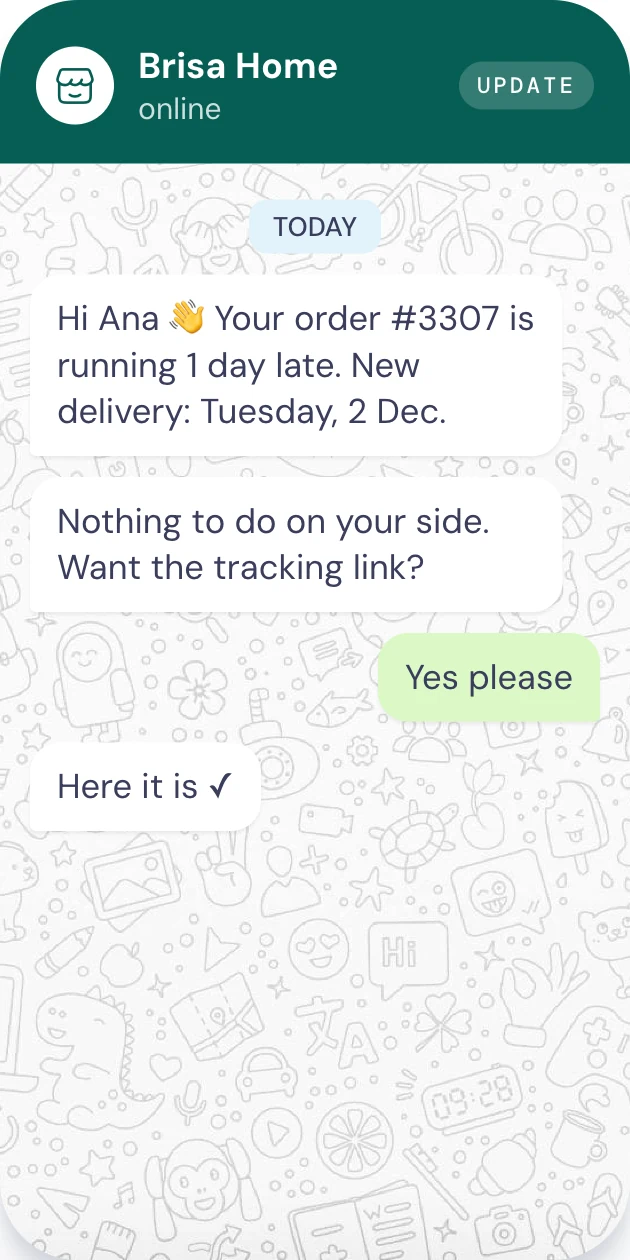
The best ticket is the one that never arrives. Send shipping updates, delay notices, and “your offer ends tonight” reminders before shoppers ask. On WhatsApp, get your message templates approved well before the sale starts.
08
ANALYTICS
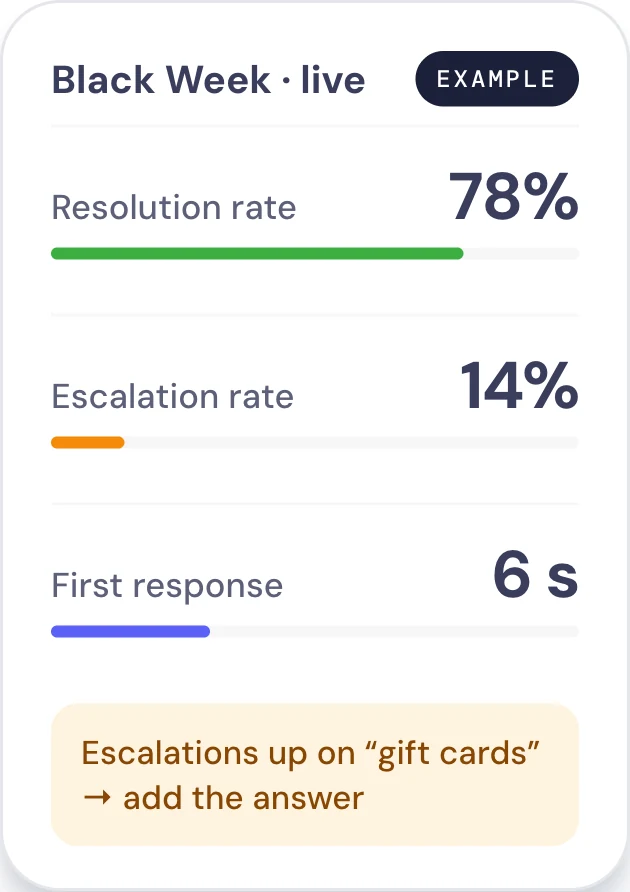
Watch Three Numbers in Real Time
Resolution rate, escalation rate, and first response time. If escalations spike on one topic, the fix is usually a missing answer in your knowledge base, not more people.
PHASE 03
DEC → JAN
After the Peak: Handle the Returns Wave
09
RETURNS
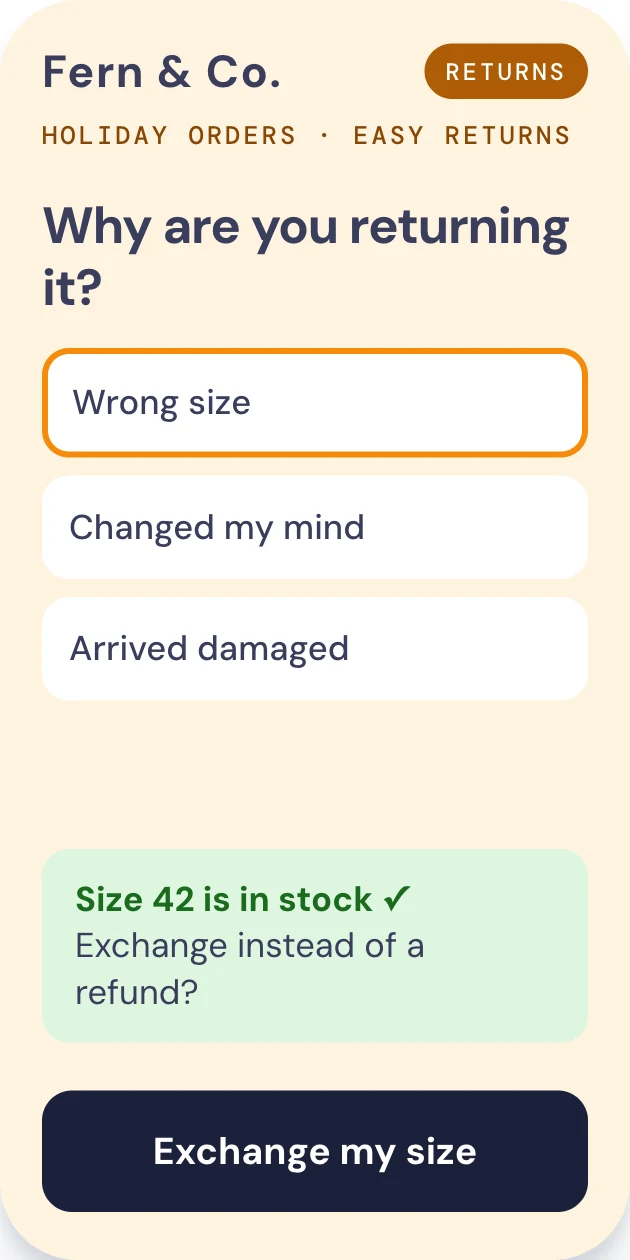
Get Ready for December Returns
Holiday returns arrive in December and January. A guided returns flow that checks eligibility, offers an exchange first, and records the reason keeps that wave manageable and saves part of the sales.
10
REVIEW
Review and Keep What Worked
Compare this year’s numbers against last November: tickets per order, resolution rate, CSAT. Most of the agents you built (order status, returns, sizing) stay useful all year. Only the promotion rules need to change.
If You Only Have Two Weeks
Audit. Pull the top three contact reasons from last November (step 1).
Automate. Build answers for those three, starting with order status (step 4).
Hand off. Define who takes over and what context they receive (step 5).
Test. Run last year’s real questions through the agent the week before the sale.
Black Friday customer service rewards preparation, not heroics.
Start with the top three ticket reasons from last year, automate them, test them with real questions, and keep your team for the conversations that need a person. You can start from our AI agent templates or build your own with the AI agent builder. Try Landbot free and have your first agent live before the rush.
Free trial · No credit card required · Edit answers in production
Frequently Asked Questions
Six weeks is comfortable; two weeks is the minimum. Leave the final week for testing with real questions from last year, not for building.
WISMO stands for “Where Is My Order?”, the most common support question in e-commerce. In peak season it often tops the ticket list, which makes it the first flow worth automating.
Whatever topped last year’s ticket list. For most stores that’s order status, followed by promotion questions and returns.
Not if the handoff is visible. Shoppers accept automated answers when they’re fast, correct, and one tap away from a person.
Often fewer than you think once repetitive questions are automated. Plan staffing around complaints, exceptions, and high-value orders instead of total ticket volume.
Many retailers extend returns for November purchases until mid or late January so gifts can be returned after the holidays. Check your legal minimum first (in the EU, online buyers have a 14-day right of withdrawal), then state the extended window clearly at checkout and in your agent.
Both, with one brain. Use the website for discovery and self-service, WhatsApp for follow-ups and proactive updates, and the same rules on each channel.
Yes. In Landbot you build the flows, connect your order data through integrations or webhooks, and edit answers in production yourself. A first order-status agent usually takes days, not weeks.
Track tickets per order, resolution rate, escalation rate, and CSAT, and compare them with last November.
Fabrizio Gutiérrez is Head of Growth & Marketing at Landbot, with over 15 years of international experience in growth, marketing, and go-to-market strategy. Throughout his career, he has helped companies navigate different stages of growth — from early-stage expansion to global scale, M&A, and IPO environments. His expertise spans SaaS, product-led growth, digital marketing, and revenue strategy, with a strong focus on connecting product, marketing, and sales to drive sustainable growth. Today, he is particularly focused on how AI is reshaping go-to-market and the way companies acquire, engage, and convert customers


.avif)
%20(1).png)
.avif)